10 Best Whole House Water Softeners 2026 in the United States


Related Products
Up to 17% off
Recommended lists
Whole House Water Filters
Our technology thoroughly searches through the online shopping world, reviewing hundreds of sites. We then process and analyze this information, updating in real-time to bring you the latest top-rated products. This way, you always get the best and most current options available.

Our Top Picks
Winner
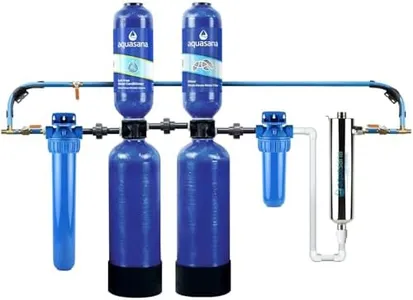
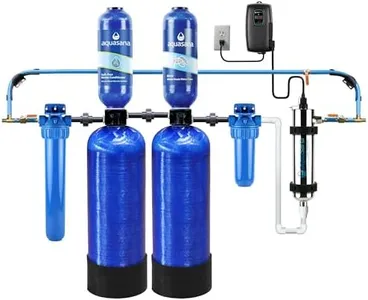
Aquasana Whole House Water Filter System | 1,000,000 Gallons | Salt-Free Softener Alternative | UV, Carbon & KDF | Tackles up to 99.99% Chlorine, Bacteria, Viruses, Sediment & Scale | EQ-1000-AST-UV
The Aquasana Whole House Water Filter System offers a unique approach to water conditioning by combining advanced filtration technologies—carbon, KDF, UV, and salt-free scale control media. This system is designed to improve water quality by reducing chlorine, bacteria, viruses, sediment, and scale without using salt or traditional softening methods. Its salt-free design means no salt bags, regeneration cycles, or electricity are needed, which can be appealing for those wanting a low-maintenance and eco-friendly option.
It’s optimized for moderate water hardness (up to 15 grains per gallon), making it suitable for many households but possibly less effective in very hard water conditions where traditional softeners excel. Unlike conventional softeners, it does not remove minerals from water but conditions it to prevent scale buildup, which benefits pipes and appliances without demineralizing drinking water. The system’s ability to handle up to 1 million gallons or last about 10 years adds good value and longevity, with an estimated cost of under $0.01 per gallon.
This product is a strong option for homeowners seeking a comprehensive filtration system that also controls scale without salt. However, those with very hard water or needing strong softening capabilities may need to consider alternative solutions.
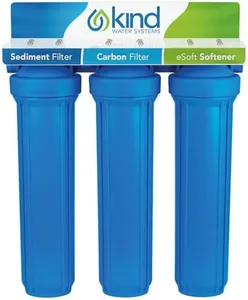
Kind Water Whole House Water Filter - Salt Free Softener, Sediment Stage, High-Performance Coconut Shell Carbon Block, Protects Pipes & Appliances - Whole House Filter - E-3000
Most important from
65 reviews
The Kind Water E-3000 is a combined whole-house water filter and salt-free softener designed for homes with up to five bathrooms. It uses a 3-stage filtration system featuring a high-performance coconut shell carbon block that effectively reduces chlorine, chloramine, and other contaminants. This makes it a strong choice if you want cleaner, better-tasting water throughout your home without using salt. It operates manually and does not rely on salt or harsh chemicals, which can be better for those concerned about salt use or environmental impact.
Its maximum flow rate is 15 gallons per minute, which is suitable for typical household water demands. Installation can be DIY or professional, and the unit is relatively lightweight compared to many whole-house systems. It's best suited for users looking for sediment and chemical filtration combined with mild scale reduction rather than heavy-duty softening.
The 120-day satisfaction guarantee adds confidence for first-time users. This system offers a convenient, salt-free alternative for improving water quality and reducing scale, though it may not fully replace traditional water softeners for very hard water conditions.
Most important from
65 reviews
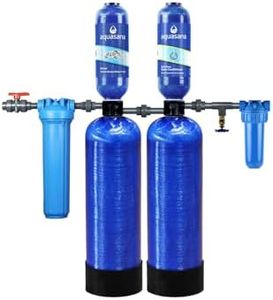
Aquasana Whole House Max Flow Water Filter | 1,000,000 Gallons | Salt-Free Softener Alternative | Carbon & KDF | Long-Lasting Pre-Filter | Reduce 97% Chlorine, Sediment & Scale | Rhino WH-1010-CT-LM
Most important from
9 reviews
The Aquasana Whole House Water Filter System (Model WH-1010-CT-LM) is designed as a salt-free water softener alternative, focusing on filtration and descaling rather than traditional water softening. The system is highly effective at removing chlorine and other contaminants, boasting a 97% removal rate and meeting NSF/ANSI Standard 42. This makes it an excellent choice for improving water quality for drinking, cooking, and bathing. It supports larger homes with a maximum flow rate of 7 gallons per minute, ensuring adequate water supply without compromising performance.
Its dual-tank design enhances water contact time with the filtration media, reducing the risk of clogging and prolonging the system's life. The salt-free operation means no salt bags, backwashing, or electricity, making it low-maintenance and environmentally friendly. However, it's important to note that this system does not soften water by removing the minerals that cause hardness, which might be a drawback for users specifically looking to soften hard water. It's best suited for areas with moderate hardness levels (up to 15 grains per gallon). While it prevents scale buildup, it does not reduce Total Dissolved Solids (TDS).
This system is straightforward to install at the point of entry of your home water line and includes a sediment pre-filter to handle larger particles. The Aquasana WH-1010-CT-LM is perfect for those seeking a comprehensive water filtration system with minimal maintenance, but it may not meet the needs of those requiring a traditional water softener for high hardness levels.