We Use CookiesWe use cookies to enhance the security, performance, functionality and for analytical and promotional activities. By continuing to browse this site you are agreeing to our privacy policy

10 Best Houseplant Fertilizers 2026 in the United States
How do we rank products for you?

Our technology thoroughly searches through the online shopping world, reviewing hundreds of sites. We then process and analyze this information, updating in real-time to bring you the latest top-rated products. This way, you always get the best and most current options available.

headphones-stars

Our Top Picks

#1

Winner

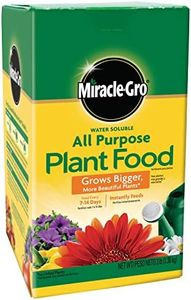
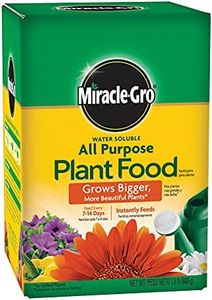
Miracle-Gro Water Soluble All Purpose Plant Food, Fertilizer for Indoor or Outdoor Flowers, Vegetables or Trees, 3 lbs.

Miracle-Gro Water Soluble All Purpose Plant Food is a versatile fertilizer suitable for various plants, including indoor and outdoor flowers, vegetables, trees, and shrubs. It stands out due to its instant feeding capability, promoting bigger and more beautiful plants compared to those that are unfed. The NPK ratio provides a balanced mix of essential nutrients, which can suit general gardening needs but may not be ideal for specialized plants that require particular nutrient ratios. It is easy to use either with the Miracle-Gro Garden Feeder or a standard watering can, making the application process flexible and user-friendly.

One of the notable strengths is its safety guarantee; it promises not to burn plants when used as directed, which is reassuring for users concerned about plant damage. Users are advised to feed their plants every 1-2 weeks, which is a frequent schedule but manageable for devoted gardeners. On the downside, the product is synthetic rather than organic, which may not appeal to those looking for natural gardening solutions. Additionally, while it covers a wide range of plants, it lacks plant-specific formulas that some specialized gardeners might prefer.

The product weight and dimensions suggest it may be bulky for those with limited storage space. It's a reliable, widely used fertilizer that offers general-purpose benefits but may not cater to niche gardening needs.

#2

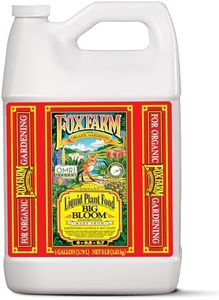
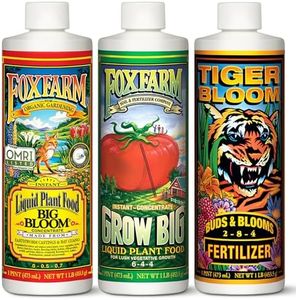
FoxFarm - Big Bloom Plant Food, Liquid Fertilizer Concentrate for Flowers, Fruits, and Vegetables, All Purpose Plant Fertilizer for Indoor & Outdoor Potted Plants, NPK 0-0.5-0.7 (Gallon)

Rating
9.7
Fertilizer Type
Organic vs. Synthetic
Application Frequency

Most important from
13147 reviews

Fertilizer Type
This liquid concentrate is straightforward to use, with clear instructions that make feeding plants simple and effective.
Organic vs. Synthetic
Its organic formulation with natural ingredients like earthworm castings and bat guano aligns well with sustainable gardening practices.
Application Frequency
Regular application is essential since liquid fertilizers provide a one-time nutrient feed and must be reapplied several times a week or weekly for best outcomes.
Plant-Specific Formulas
The product excels at stimulating flowering and fruiting, especially evident with plants like mandevilla that showed blooms within 48 hours of use.

FoxFarm Big Bloom is a liquid fertilizer designed mainly for flowering and fruiting plants, making it a good fit if you want to boost blooms and improve flavor in herbs, fruits, and vegetables. Its NPK ratio is very low in nitrogen (0) and phosphorus (0.5) and potassium (0.7), which means it's not meant for heavy leaf growth but focuses more on flower and fruit development.

This product is organic, using natural ingredients like earthworm castings and bat guano, so it's a gentle option for indoor and outdoor plants without harmful chemicals. It also includes micronutrients that support root strength and overall plant health. One of its strengths is the ease of use as a liquid concentrate that mixes with water, making feeding your plants straightforward. However, if you need a fertilizer that promotes leafy growth or has a balanced NPK ratio for general feeding, this might not be ideal. It’s also best suited for plants that bloom or produce fruit, so for general houseplants or foliage plants, you might want a different formula.

Big Bloom is a versatile, organic fertilizer suitable for gardeners focused on flower and fruit production who want a natural feeding option that strengthens roots and enhances flavor.

Rating
9.7
Fertilizer Type
Organic vs. Synthetic
Application Frequency

Most important from
13147 reviews

Fertilizer Type
This liquid concentrate is straightforward to use, with clear instructions that make feeding plants simple and effective.
Organic vs. Synthetic
Its organic formulation with natural ingredients like earthworm castings and bat guano aligns well with sustainable gardening practices.
Application Frequency
Regular application is essential since liquid fertilizers provide a one-time nutrient feed and must be reapplied several times a week or weekly for best outcomes.
Plant-Specific Formulas
The product excels at stimulating flowering and fruiting, especially evident with plants like mandevilla that showed blooms within 48 hours of use.
#3

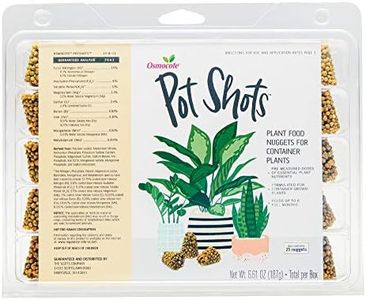
Osmocote PotShots: Premeasured House Plant Food, Feed for up to 6 Months, 25 Nuggets

Rating
9.4
Application Frequency
Fertilizer Type

Most important from
12188 reviews

Application Frequency
The slow-release formula delivers consistent nutrients for months, making feeding plants effortless and reliable.
Fertilizer Type
Its easy application and steady nutrient delivery make window boxes and potted plants flourish beautifully.

Osmocote PotShots are slow-release fertilizer nuggets designed specifically for potted plants, making feeding your indoor and outdoor container plants simple and convenient. The product’s biggest strength is its long feeding duration—each application can feed plants for up to 6 months, which means you only need to fertilize twice a year. This is great if you prefer a low-maintenance approach. The nuggets come pre-measured, reducing guesswork about how much fertilizer to use, which helps avoid over- or under-feeding. Osmocote uses a special slow-release coating derived from soybean oil, ensuring nutrients are delivered steadily over time rather than all at once, which is better for plant health.

Osmocote formulas typically provide a balanced mix of essential nutrients, including micronutrients, suitable for most common houseplants. However, this product isn’t organic, so if you prefer natural fertilizers, this might not be the best fit. Also, it is a general-purpose option rather than specialized for certain types of houseplants.

Application is straightforward: you just push the nuggets into the soil near the plant’s stem and water it in. The package includes 25 nuggets, so depending on your pot sizes, they should last a good while. Some users might find it less customizable if they have very small or very large pots, but for typical houseplants, it’s an easy and efficient solution. Osmocote PotShots suit houseplant owners who want a reliable, low-effort fertilizer with steady nutrient release but may not suit those looking for organic or highly specialized feeding options.

Rating
9.4
Application Frequency
Fertilizer Type

Most important from
12188 reviews

Application Frequency
The slow-release formula delivers consistent nutrients for months, making feeding plants effortless and reliable.
Fertilizer Type
Its easy application and steady nutrient delivery make window boxes and potted plants flourish beautifully.

Buying Guide for the Best Houseplant Fertilizers

Choosing the right houseplant fertilizer is essential for the health and growth of your indoor plants. Fertilizers provide essential nutrients that plants need to thrive, and selecting the right one can make a significant difference in their overall well-being. When picking a fertilizer, consider the type of plants you have, their growth stage, and specific nutrient requirements. Here are some key specifications to help you make an informed decision.
NPK RatioThe NPK ratio stands for Nitrogen (N), Phosphorus (P), and Potassium (K), which are the primary nutrients in fertilizers. Nitrogen promotes leafy growth, phosphorus supports root development and flowering, and potassium enhances overall plant health. The ratio is usually displayed as three numbers (e.g., 10-10-10). For leafy plants, a higher nitrogen content is beneficial, while flowering plants may need more phosphorus. Choose a balanced ratio for general use or a specific ratio based on your plant's needs.
Fertilizer TypeFertilizers come in various forms, including liquid, granular, and slow-release. Liquid fertilizers are fast-acting and easy to apply, making them ideal for quick nutrient boosts. Granular fertilizers are sprinkled on the soil and provide nutrients over time. Slow-release fertilizers gradually release nutrients over several months, reducing the need for frequent applications. Consider your convenience and the specific needs of your plants when choosing the type.
Organic vs. SyntheticOrganic fertilizers are made from natural sources like compost, manure, and bone meal, and they improve soil health over time. Synthetic fertilizers are chemically formulated and provide immediate nutrient availability. Organic options are generally safer for the environment and beneficial for long-term soil health, while synthetic fertilizers offer precise nutrient control and quick results. Choose organic if you prefer natural gardening practices or synthetic for immediate nutrient needs.
MicronutrientsIn addition to NPK, plants need micronutrients like iron, magnesium, and zinc for optimal growth. These are often included in fertilizers in smaller amounts. Micronutrients are crucial for specific functions like chlorophyll production and enzyme activation. Check the fertilizer label for a complete list of nutrients to ensure your plants receive a well-rounded diet. If your plants show signs of micronutrient deficiencies (e.g., yellowing leaves), choose a fertilizer that includes these essential elements.
Application FrequencyDifferent fertilizers have varying application frequencies, ranging from weekly to every few months. Liquid fertilizers often require more frequent applications, while slow-release options can last for several months. Consider your schedule and how often you can tend to your plants. If you prefer less frequent maintenance, a slow-release fertilizer might be the best choice. Always follow the manufacturer's instructions to avoid over-fertilizing, which can harm your plants.
Plant-Specific FormulasSome fertilizers are formulated specifically for certain types of plants, such as succulents, orchids, or flowering plants. These formulas are tailored to meet the unique nutrient requirements of those plants. If you have a diverse collection of houseplants, you might benefit from using plant-specific fertilizers to cater to their individual needs. For a more straightforward approach, a general-purpose fertilizer can be used for a variety of plants.

FAQ