We Use CookiesWe use cookies to enhance the security, performance, functionality and for analytical and promotional activities. By continuing to browse this site you are agreeing to our privacy policy

10 Best Radiant Reflective Barriers 2026 in the United States
How do we rank products for you?

Our technology thoroughly searches through the online shopping world, reviewing hundreds of sites. We then process and analyze this information, updating in real-time to bring you the latest top-rated products. This way, you always get the best and most current options available.

headphones-stars

Our Top Picks

#1

Winner

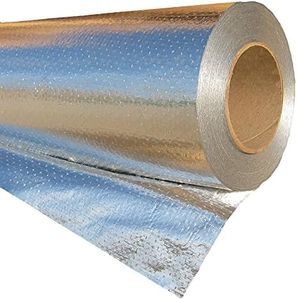
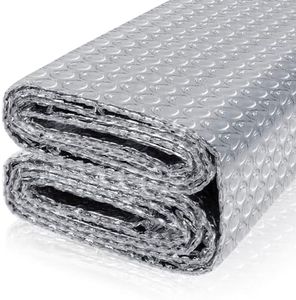
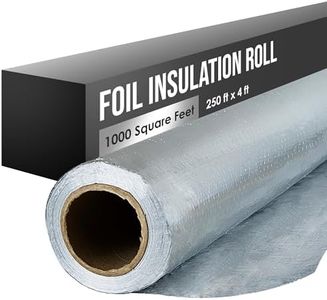
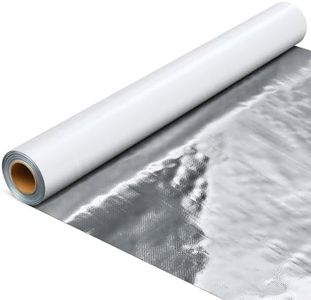
Radiant Barrier 1000 sq ft Reflective Insulation Roll Xtreme Heavy Duty Attic Foil, 48-inch by 250-feet Perforated Breathable Double Reflective Aluminum House Wrap Thermal Roll

Rating
10.0
Chosen by1,420
Material Type

Most important from
752 reviews

Material Type
The material is heavy-duty and tear-resistant, making installation straightforward even in challenging conditions.

The RadiantGUARD Xtreme Heavy Duty Attic Foil stands out with its high reflectivity, blocking 95% of radiant heat transfer, making it highly effective in maintaining consistent home temperatures and reducing utility bills. The material is aluminum, which is both durable and lightweight, and the product's thickness of 6.5 mils ensures adequate sturdiness without being overly bulky. The perforated design allows for breathability, preventing moisture build-up which is beneficial for attic installations.

This product meets stringent ASTM C1313 standards, ensuring high quality and safety, including a Class A fire rating. The heavy-duty nature, weighing 28 lbs, makes it more robust compared to some competitors, adding to its long-term durability. Installation is user-friendly, as it can be easily cut with utility scissors and installed using a staple gun. No special protective equipment is required, making it safe and convenient for DIY enthusiasts.

However, its weight and the requirement to cover both attic rafters and vertical walls may pose a challenge for single-person installations. Additionally, while it is non-toxic and maintenance-free, users need to ensure complete coverage to maximize effectiveness. This product is ideal for those looking to improve their home's energy efficiency, particularly in attics, roofs, and even RVs or metal buildings.

Rating
10.0
Chosen by1,420
Material Type

Most important from
752 reviews

Material Type
The material is heavy-duty and tear-resistant, making installation straightforward even in challenging conditions.
#2

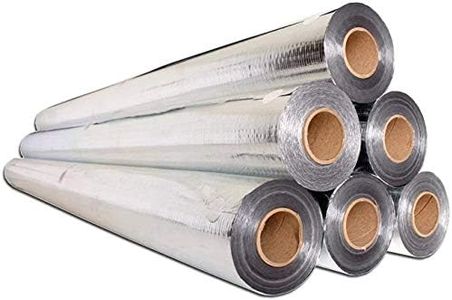
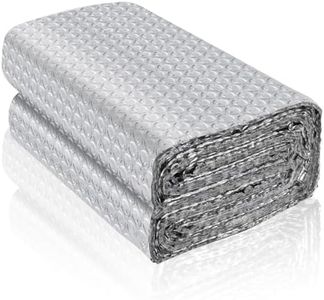
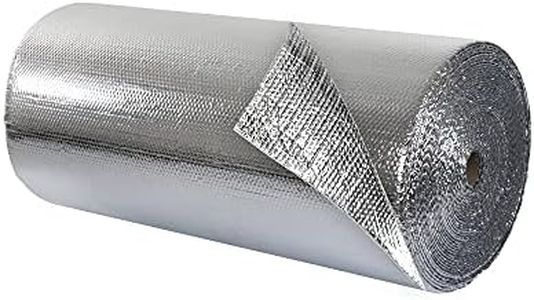
US Energy Products Radiant Barrier Insulation 1000 sqft (4ft Wide) Commercial Grade Perforated No Tear Green Energy Radiant Barrier Reflective Insulation Solar Attic Foil Roof House Wrap SCIF RIFD

Rating
9.1
Reflectivity
Material Type
Installation Method

Most important from
581 reviews

Reflectivity
Transforming a 30x40 metal shop building, this radiant barrier made an unbearable space comfortable even on 90+ degree days.
Material Type
Durable and resilient, the material doesn't tear easily and feels like heavy-duty tin foil with fiber reinforcement.
Installation Method
Best installed with two people, the product is easy to work with and significantly reduces heat when properly placed.
Durability
Durable and resilient, the material doesn't tear easily and feels like heavy-duty tin foil with fiber reinforcement.

The US Energy Products Radiant Barrier Insulation is a commercial-grade product designed to improve energy efficiency in residential and commercial spaces. One of its key strengths is its high reflectivity due to the aluminum material, which effectively reflects radiant heat. This makes it a good option for attic, roof, and wall insulation, helping to keep buildings cooler in the summer and warmer in the winter.

Additionally, it features a perforated design that prevents moisture buildup, which can be a common issue with non-perforated barriers. This product is also marketed as 'No Tear,' suggesting durability and a longer lifespan, which is essential for such installations. The installation process is relatively straightforward, as it comes in a 4ft wide roll, making it easier to handle and apply in various settings. However, at 30.5 pounds, it might be a bit heavy for a single person to manage without help.

This radiant barrier is suitable for those looking to enhance energy efficiency in their homes or commercial buildings, particularly in areas prone to high heat. Potential buyers should consider the weight and may need to check for additional details on emissivity if this is a critical concern for their specific application.

Rating
9.1
Reflectivity
Material Type
Installation Method

Most important from
581 reviews

Reflectivity
Transforming a 30x40 metal shop building, this radiant barrier made an unbearable space comfortable even on 90+ degree days.
Material Type
Durable and resilient, the material doesn't tear easily and feels like heavy-duty tin foil with fiber reinforcement.
Installation Method
Best installed with two people, the product is easy to work with and significantly reduces heat when properly placed.
Durability
Durable and resilient, the material doesn't tear easily and feels like heavy-duty tin foil with fiber reinforcement.
#3

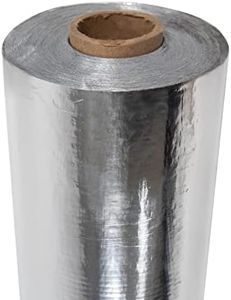
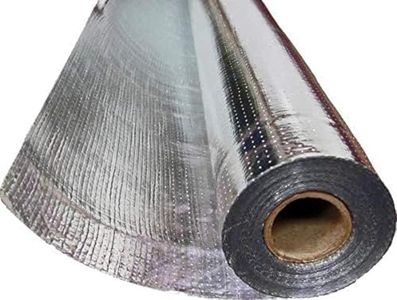
EcoFoil rFoil Ultra NT Solid Radiant Barrier 48" x 250’ (1,000 sq ft) for SCIFs – Non-Perforated SCIF Foil Blocks RF Signals and Creates Vapor Barrier

The Ultra NT Solid SCIF Radiant Barrier is a 1000 square feet non-perforated foil designed for effective RF blocking and RF shielding. It reflects 97% of radiant heat, making it highly efficient in thermal insulation. The material is made from woven polyethylene bonded to two radiant barrier sheets, offering high durability and tear resistance.

It also acts as a vapor barrier when properly installed with SCIF tape, preventing moisture passage and enhancing its functionality in various environments. This product is lightweight, easy to cut and install, which makes it user-friendly for both professional and DIY projects. Its primary applications include military, government, and corporate settings where RF attenuation is necessary to secure sensitive information.

The barrier meets Class 1 / Class A fire rating standards, ensuring safety in installation and use. Additionally, it is non-toxic, fiber-free, and does not off-gas, making it safe for indoor environments. If you are in need of a specialized RF-blocking solution with high reflectivity and durability, especially for secure facilities, this product could be a suitable choice.

Buying Guide for the Best Radiant Reflective Barriers

Radiant-reflective barriers are materials used in construction to reduce heat transfer by reflecting radiant heat rather than absorbing it. They are commonly used in attics, walls, and floors to improve energy efficiency in buildings. When choosing a radiant-reflective barrier, it's important to consider several key specifications to ensure you select the best product for your needs. Understanding these specifications will help you make an informed decision and achieve optimal performance in your specific application.
ReflectivityReflectivity measures how well the barrier reflects radiant heat. This is important because higher reflectivity means more heat is reflected away from the living space, improving energy efficiency. Reflectivity is usually expressed as a percentage. Barriers with reflectivity above 90% are considered high-performance and are ideal for hot climates where reducing heat gain is crucial. For moderate climates, a reflectivity of around 80-90% may be sufficient. Choose a barrier with high reflectivity if your primary goal is to minimize heat transfer and lower cooling costs.
EmissivityEmissivity indicates how much heat the barrier emits after absorbing it. Lower emissivity means the material emits less heat, which is beneficial for maintaining cooler indoor temperatures. Emissivity values range from 0 to 1, with lower values being better. A barrier with an emissivity of 0.1 or lower is highly effective. If you live in a hot climate or have high cooling costs, opt for a barrier with low emissivity to maximize energy savings.
Material TypeRadiant-reflective barriers can be made from various materials, including aluminum foil, metalized film, and reflective paint. Aluminum foil is highly reflective and durable, making it a popular choice. Metalized film is lightweight and easy to install but may be less durable. Reflective paint can be applied to existing surfaces but may not offer the same level of performance as foil or film. Consider the installation location and ease of application when choosing the material type. For long-term performance and durability, aluminum foil is often the best choice.
PerforationPerforation refers to small holes in the barrier that allow moisture to pass through, preventing condensation and mold growth. This is important in humid climates where moisture buildup can be a concern. Perforated barriers are ideal for attic installations where ventilation is necessary. Non-perforated barriers provide a continuous moisture barrier and are suitable for dry climates or areas where moisture control is not a primary concern. Choose perforated barriers if you need to balance heat reflection with moisture management.
Installation MethodThe installation method can vary depending on the type of barrier and the application area. Some barriers are designed for stapling or taping to existing structures, while others may require professional installation. Ease of installation is important for DIY projects, so consider barriers that come with clear instructions and necessary accessories. For large or complex installations, professional installation may ensure better performance and longevity. Choose an installation method that matches your skill level and the complexity of the project.
DurabilityDurability refers to the barrier's ability to withstand environmental conditions and maintain its performance over time. This is important for ensuring long-term energy savings and avoiding frequent replacements. Durable barriers are typically made from high-quality materials and have a longer lifespan. Consider the environmental conditions of your installation area, such as temperature fluctuations and humidity levels, when assessing durability. For areas with harsh conditions, choose a barrier with proven durability to ensure lasting performance.

FAQ